Space · Ages 8+ · 15 min · Kholo Plus
Satellite
Why it never falls down, and how TV comes from space.
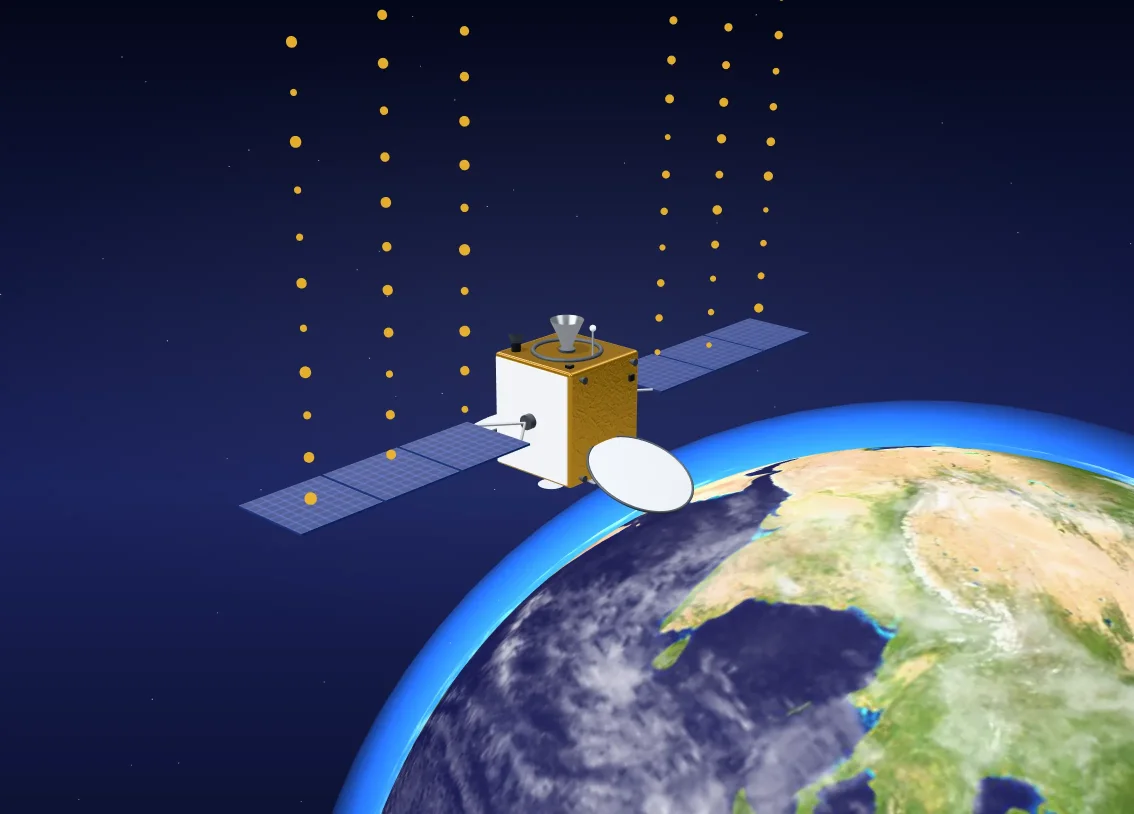
What is inside
- Body (bus). A strong box wrapped in shiny foil that holds every other part.
- Solar power. Solar wings turn sunlight into electricity; batteries keep it running in the dark.
- Antennas & signals. Giant dishes catch signals from Earth, and send them back down to your TV or phone.
- Balance & pointing. Star cameras see where it is pointing; spinning wheels turn it without fuel.
- Engines & fuel. A main engine to climb to its orbit, and tiny thrusters to stay in place.
- Keeping cool. White radiators throw away the heat the electronics make.
- Brain & radio link. A computer runs everything and talks to mission control.
Stories in this thing
- Why doesn’t it fall?. The secret: it is falling — and missing!
- Different orbits. Low, high and over the poles
- Power from the Sun. Sunlight in, electricity out, heat away
- How TV comes from space. Up to the satellite and back to your home
- Staying pointed. Star cameras, spinning wheels and tiny puffs
- From rocket to orbit. Folded up, dropped off, opened out
School topics it covers
- Gravity
- Orbits
How children use it
Pull it apart with one slider, tap any part to hear what it does, follow a short story read aloud, then answer a few questions. Every thing comes with experiments to try at home and study notes linked to the NCERT chapter it supports.
More things to open
- Rocket — Ride ISRO’s LVM3 from countdown all the way to space.
- Solar system — Why it is night, why summer is hot, and how Chandrayaan reached the Moon.
- Cruise ship — Why steel floats — and the secret crew corridor inside.
- Electricity — From the power station to your switch — and what happens when you flick it.
- Smartphone — Pull it apart into seven layers — the screen, the chip, the battery and the radios that carry your voice.
- Humanoid robot — Motor muscles, camera eyes and a computer brain.